
Fear of the Dark? A Guide to Your Home's Electrical Panel
Posted On: Dec 16, 2025
Author:
electrical safety home maintenance first-time homeowner
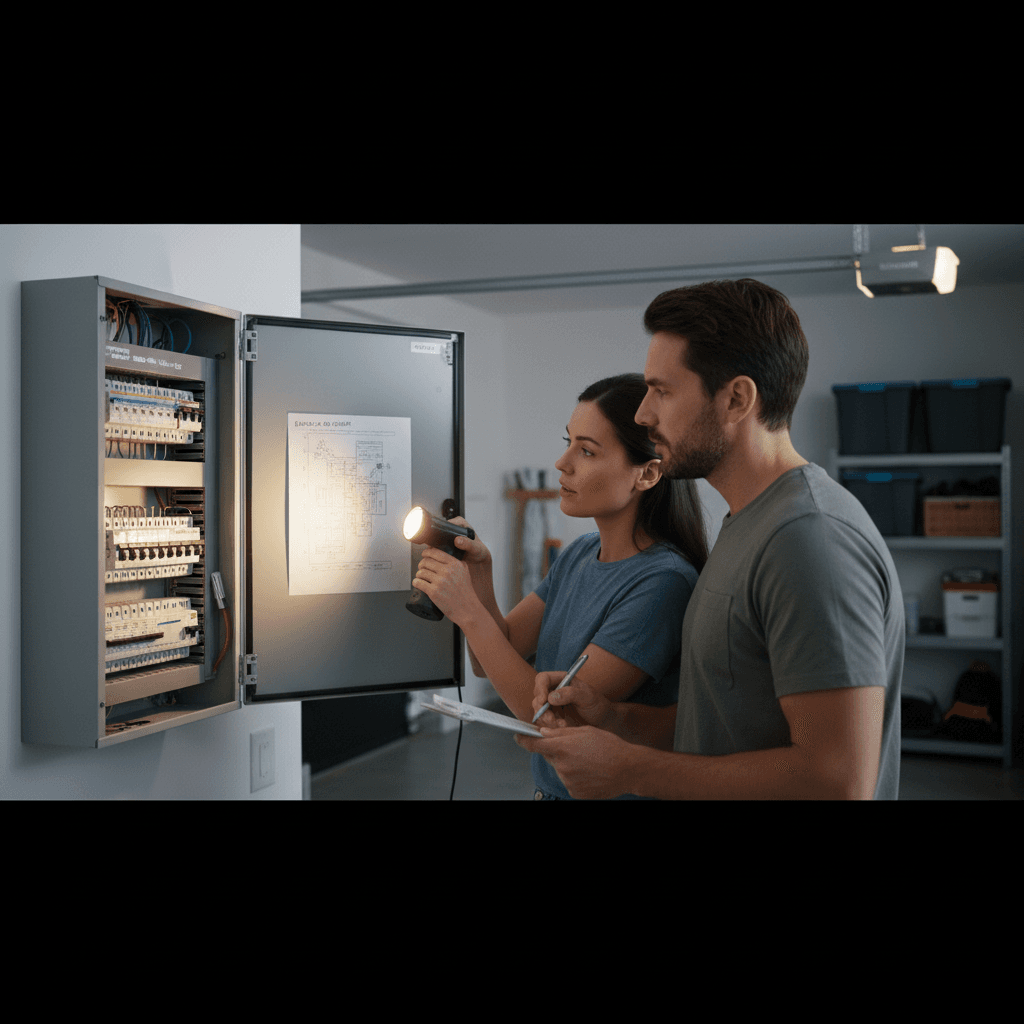
For many new homeowners, there's a mysterious metal box tucked away in a closet, basement, or garage. It hums quietly, covered in cryptic labels, and is generally ignored... until the lights go out in the middle of making dinner.
That box is your home's electrical panel (or breaker box), and it's the nerve center of your entire property. While it might seem intimidating, understanding the basics is one of the most empowering things you can do as a homeowner. It’s not about becoming an electrician; it’s about safety, confidence, and knowing how to handle the most common electrical hiccup: a tripped breaker.
What Exactly IS an Electrical Panel?
Think of the electrical panel as a switchboard. Power flows from the utility line into your home and through the panel. The panel then divides this main power line into smaller electrical circuits that run to different parts of your house—one for the kitchen outlets, one for the bedroom lights, another for the washing machine, and so on.
Each of these circuits is protected by a circuit breaker. The breaker is a safety switch that automatically trips (shuts off) if it detects too much electrical current, preventing overheating, electrical fires, or damage to your appliances.
A Quick Tour of Your Breaker Box
Open the door to your panel (it's perfectly safe to do so) and you'll see a few key components:
- The Main Breaker: This is the big kahuna, usually a large, single switch at the very top of the panel. This breaker controls all the power to your entire home. Turning it off will shut everything down (except for the power coming to the panel itself).
- Individual Circuit Breakers: These are the rows of smaller switches. Each one controls a specific circuit in your home. They should be labeled to tell you what area or appliance they power.
- The Panel Directory: This is the map! Usually pasted to the inside of the panel door, this directory (or legend) lists which breaker corresponds to which room or major appliance. If it's poorly labeled or filled with a previous owner's scribbles, your first project is to fix it!
How to Safely Reset a Tripped Breaker
This is the #1 reason you'll ever need to visit your panel. A breaker trips because a circuit was overloaded (you plugged a toaster, microwave, and coffee maker into one outlet) or an appliance short-circuited.
Here’s the safe, simple, three-step process:
- Identify the Tripped Breaker: Look for the one switch that is not aligned with the others. It will likely be in the middle position, between ON and OFF, or it may be fully in the OFF position. You might even see a small red or orange window on some modern breakers.
- Turn it Fully OFF: Before you can turn it back on, you must push the switch firmly into the full OFF position. You might feel a click. This resets the mechanism inside the breaker.
- Switch it Back ON: Now, simply flip the switch back to the ON position. The power to that circuit should be restored.
Important Note: If the breaker trips again immediately, do not keep resetting it. This indicates a more serious problem, like a short circuit. Unplug everything from that circuit and call a licensed electrician.
Red Flags: When to Leave It to the Professionals
Your job as a homeowner is to know the basics and, more importantly, to know when a problem is beyond your skill level. Electrical work is not the place to “give it a try.” Call a licensed electrician immediately if you notice:
- A burning smell or scorch marks around the panel or outlets.
- Breakers that trip constantly and for no apparent reason.
- Buzzing or crackling sounds coming from the panel.
- The panel feels warm to the touch.
- Flickering or dimming lights that aren't related to a bad bulb.
Proactive Care for Your Home's Nerve Center
Knowing your way around the panel is a fantastic start. For long-term peace of mind, make sure your panel directory is clearly labeled. Consider it a 30-minute project: grab a friend and a small lamp, and go circuit by circuit to create an accurate map. You'll thank yourself later.
Understanding your electrical panel transforms it from a source of anxiety into a tool you can manage. It’s about taking control and protecting your home, one circuit at a time.
Feeling empowered? This is just one piece of your home's complex puzzle. Keeping track of when to test your smoke detectors, schedule a professional electrical inspection every few years, and budget for a potential panel upgrade in an older home can feel like a lot to juggle.
This is exactly why we built Properteer. Our app helps you turn confusion into a clear, actionable plan. With Properteer, you can log the age and condition of your electrical system, get smart alerts for crucial maintenance tasks, and build a long-term budget for future repairs and replacements. Stop reacting to problems and start proactively managing your home's health. Download Properteer today and gain the peace of mind that comes from being a truly prepared homeowner.